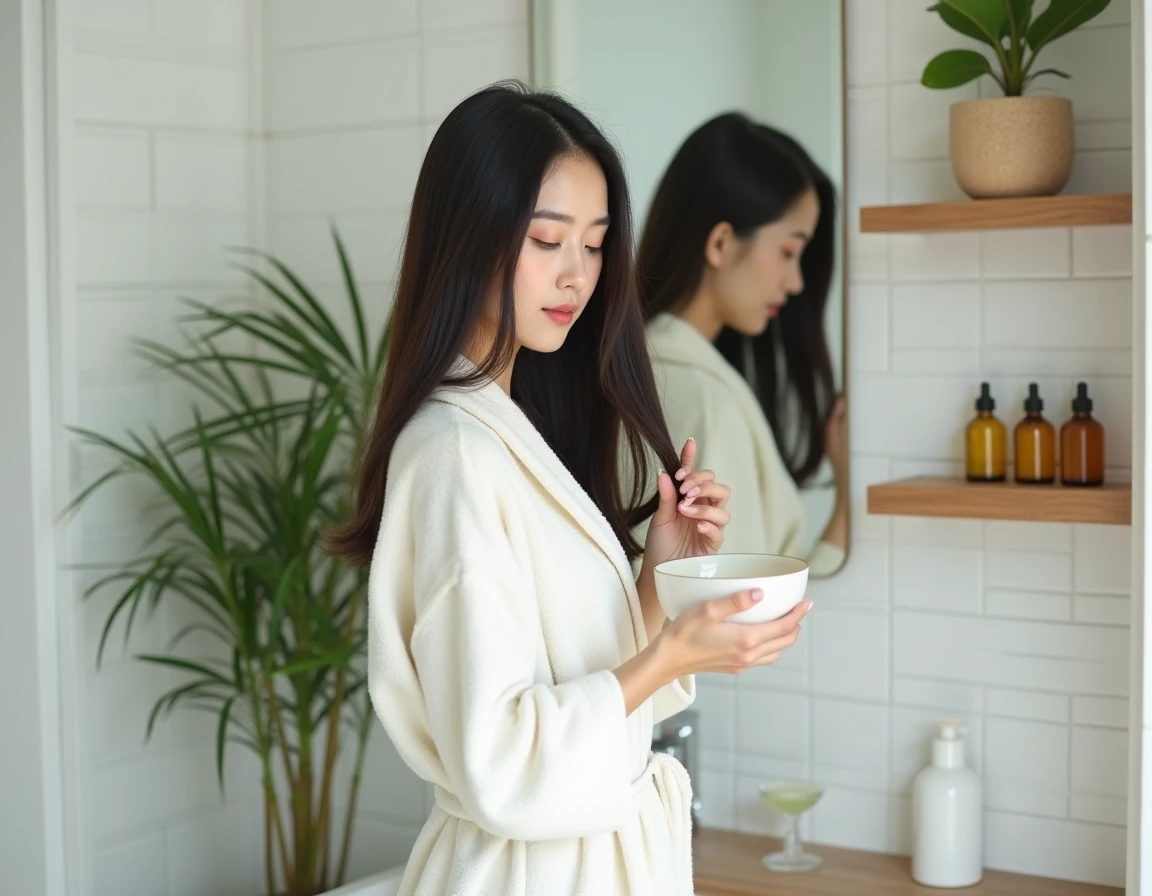
The Korean scalp is treated as an extension of the face. This approach, championed by brands like Dr.FORHAIR and Aromatica, structures the entire Korean hair care routine around ingredients borrowed from skincare: niacinamide, PHA, probiotics. The result on the hair fiber (softness, shine, flexibility) directly stems from the condition of the scalp, not from yet another length mask.
Scalp serums and hair toners: skincare ingredients applied to the scalp
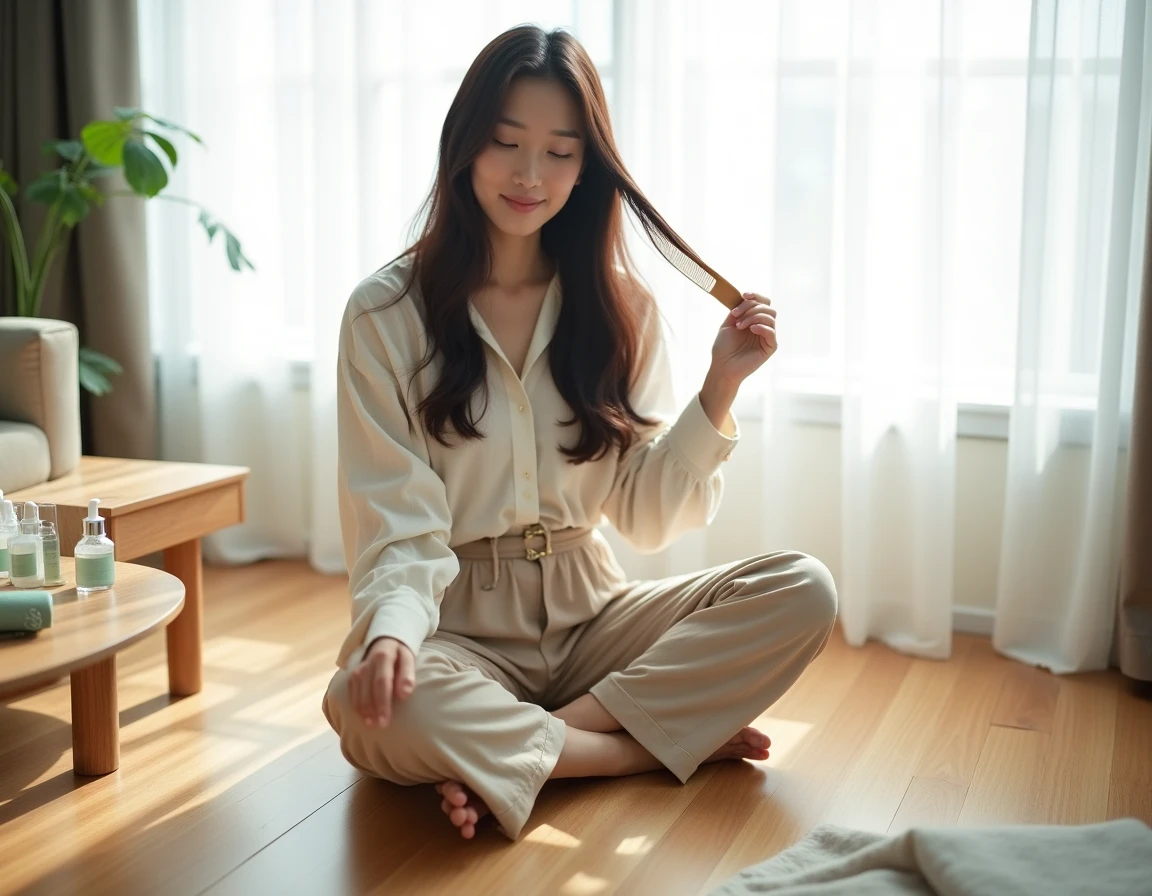
Scalp serums are not a marketing gimmick. They address a specific problem: chronic micro-inflammations caused by urban pollution, oxidized sebum, and residues from styling products. In Seoul, where air quality is a documented issue, hair care lines have integrated anti-irritation ingredients long before the trend reached Europe.
A niacinamide scalp serum works on the scalp’s skin barrier just like it would on the face. It regulates sebum production, reduces redness, and prepares the ground for the shampoo to cleanse without stripping. Exfoliating toners based on PHA (polyhydroxy acids), which are gentler than AHAs, dissolve dead cells accumulated at the roots without causing dryness.
We recommend applying these serums to a dry scalp, before shampooing, targeting areas of tension (temples, nape, parting). A few minutes of pause is sufficient. This gesture, performed once or twice a week, transforms the quality of the hair at the roots, where it all happens.
To delve deeper into each step of this approach, the Korean hair care routine on Owly Mary details protocols suited to different scalp types.
Korean low-poo: washing frequency and maintaining the hydrolipidic film

Daily washing with regular shampoo destroys the hydrolipidic film of the scalp. Korean hairdressers have adapted the low-poo concept by integrating it into their layered care logic: alternating a very gentle shampoo (low pH, around 5.5) with rinses of slightly vinegar-infused warm water on intermediate days.
Reducing washing frequency does not mean leaving the scalp dirty. The idea is to replace foaming shampoo with gentle mechanical cleansing (water + massage) or a co-wash on non-shampoo days. The scalp gradually rebalances its sebum production, which reduces the “greasy roots, dry ends” effect that many experience.
This method works particularly well for mixed hair types. Korean acidic shampoos, formulated with amino acids as the main surfactants, cleanse without stripping natural lipids. The foam is minimal, but the effectiveness is real. Mise-en-Scène offers formulations of this type, designed for alternating use.
Adapting low-poo for European hair
European hair fiber, often thicker and more porous than Asian fiber, absorbs more residues. We find that a gradual transition works better than a sudden stop: start by spacing out shampoos by one day, then two, over several weeks. The vinegar rinse (diluted rice vinegar) closes the cuticles and provides a shine that regular conditioners do not replicate.
Probiotics and fermentation in Korean hair care
Fermentation is the technical pillar that distinguishes K-beauty hair care from Western approaches. Fermented ingredients penetrate the hair cuticle more easily because the fermentation process reduces the molecular size of the nutrients. It’s the same principle as fermented essences in skincare.
Aromatica uses fermented extracts from seeds and plants in its hair care products. Dr.FORHAIR incorporates probiotic complexes that rebalance the scalp microbiome. This microbiome, when disrupted (by aggressive sulfates, stress, or heat from styling tools), triggers dandruff, itching, and diffuse hair loss.
- Lactobacillus lysates strengthen the scalp barrier and reduce sensitivity to external aggressions, including pollution from fine particles.
- Fermented rice extracts (koji) provide amino acids that fill gaps in the cuticle, making the fiber smoother to the touch.
- Enzymes from fermentation dissolve limescale deposits left by hard water, a common problem in Europe that dulls even well-maintained hair.
Hair layering: order of application and common mistakes
Applying products in the wrong order negates their benefits. The Korean hair layering follows a logic of increasing molecular weight, identical to that of facial skincare: from the lightest to the heaviest, from the most aqueous to the most oily.
- Scalp serum or toner (liquid texture, targeted ingredients) first, on a dry or slightly damp scalp.
- Gentle shampoo or co-wash to cleanse without stripping the serum’s active ingredients, massaging with fingertips.
- Conditioner or mask only on the lengths, never on the roots, to avoid weighing down the hair and suffocating the scalp.
- Finishing serum or light oil on damp ends, in minimal quantity, to seal in hydration.
The most common mistake we observe: applying a rich mask before shampooing “for better nourishment.” In reality, the rich mask applied before shampooing gets rinsed off almost entirely, wasting the product and its active ingredients. The mask should come after cleansing, on towel-dried hair, so that the cuticle opened by water can actually absorb the nutrients.
Application time and water temperature
Hot water opens the cuticles, cold water closes them. Korean hairdressers exploit this property: warm rinse during shampooing, then a blast of cool water as the final rinse to smooth the cuticle and enhance shine. The application time for Korean masks is generally shorter than that of Western masks, between three to five minutes, because the low molecular weight fermented ingredients act faster.
The soft and shiny hair associated with Korean standards relies on this coherence between a healthy scalp, respectful cleansing, and a reasoned layering of light treatments. No isolated miracle product can produce this result. It is the complete architecture of the routine, repeated regularly, that makes the difference in the texture and shine of the hair.