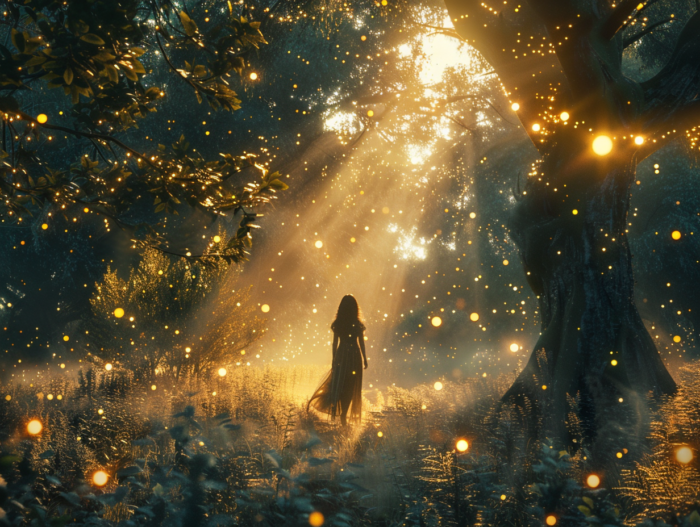
In the field of contemporary art, a fascinating movement is gaining ground: the visual representation of dreams. This trend, referred to as dream diving, invites spectators to immerse themselves in artistic creations that evoke the realm of dreams. The artists of this movement use various mediums such as painting, installation, video, and virtual reality to recreate the blurred textures and fluid transitions that characterize our nocturnal adventures. These works provoke reflection on the ephemeral nature of reality and the subjective experience of the unconscious, thus offering a gateway to the mysteries of the human mind.
Exploration of the Imagination: A Journey Through Dreams in Art
Dream diving and artistic immersion in the world of dreams constitute a major axis of contemporary art. These creations unfold in the space of galleries and museums, inviting the public to dive into a dreamlike universe where the boundaries between reality and imagination blur. The Palais de Tokyo was the stage for such an experience in 2013, when Philippe Parreno integrated his works, notably ‘Anywhere, Anywhere Out of the World’, into an immersive exhibition. Parreno managed to transform the museum space into a playground for the imagination, where each visitor became the protagonist of a unique sensory adventure.
In a similar vein, Pierre Huyghe animated the Centre Pompidou with a lively retrospective in 2013, populated with diverse life forms, thus questioning artistic creation in the museum space. In contrast, the exhibition ‘Dreaming the Universe’ at the Musée de La Poste illustrates how immersion in the world of art can draw inspiration from space, this infinite and mysterious backdrop, to project the visitor into the heart of humanity’s greatest questions. The paintings on the theme of dreams in this exhibition resonate with the aspirations and curiosities of spectators, who find themselves navigating between science and poetry.
Art in nature has also proven to be a powerful vector for exploring dreams. Salvador Dalí, the undisputed master of surrealism, continues to captivate us with the exhibition ‘Art in Nature – Dalí Universe’, presented at Parc de la Villette in 2023. Dalí’s work, extending into nature, creates a dialogue between the natural environment and the artist’s unbridled imagination. Virtual reality, for its part, redraws the boundaries of art in life, offering immersive experiences such as the Atelier des Lumières, where the public is literally plunged into the artist’s work, abolishing any distance between the spectator and the creation.
The Emotional Resonance of Dreams in Contemporary Art
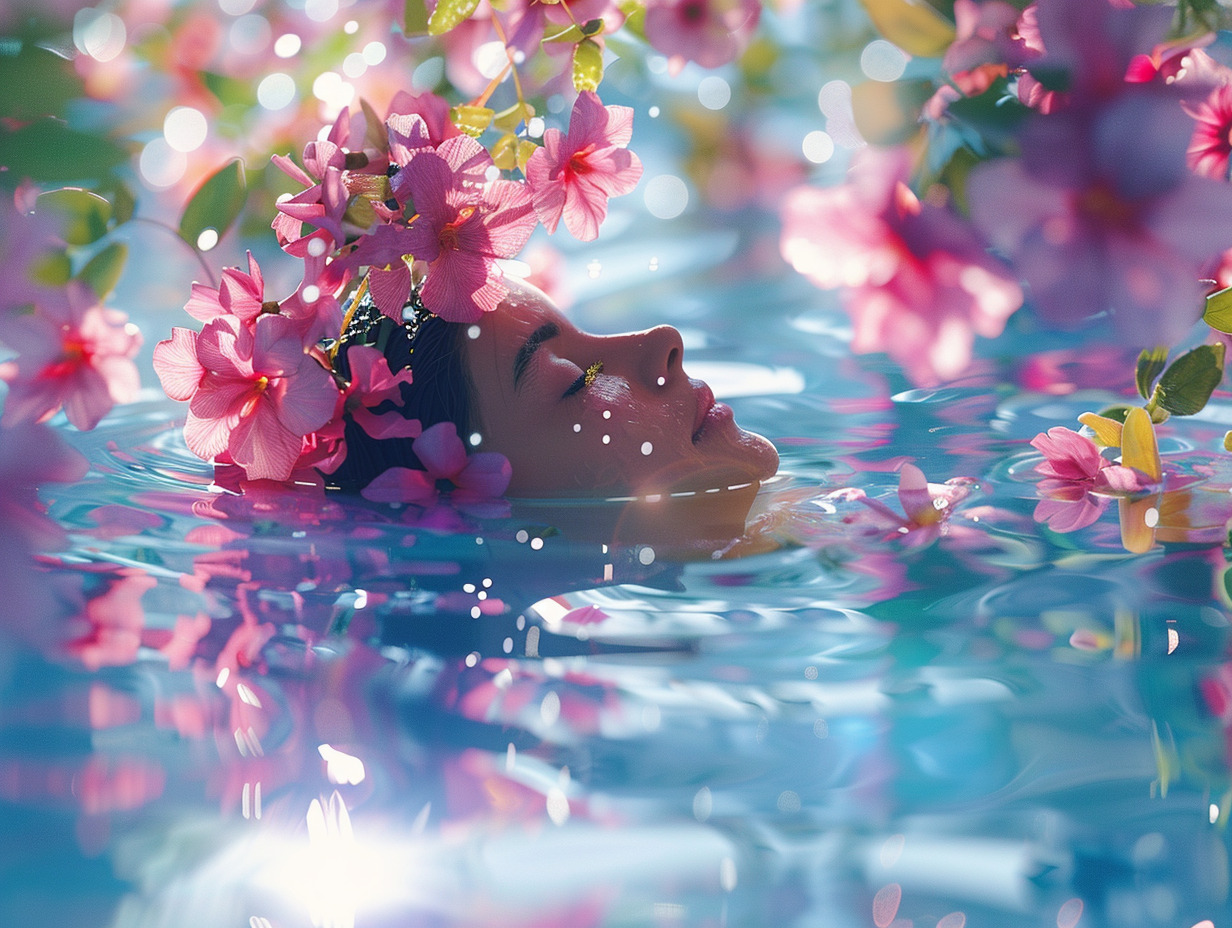
Contemporary art, in its perpetual quest for renewal, seizes dreams with rare intensity. Dreams, those ephemeral fragments of our inner life, offer an unlimited space for creation. They reflect an intimate journey into our unconscious, a sensory and emotional experience that contemporary artists seek to capture and translate into their works.
Samara Golden, for example, presented ‘The Flat Side of the Knife’ at MoMA PS1 in 2015, an installation immersing the visitor in a parallel dimension, a space where sleep and wakefulness blur. This work creates a particular resonance with the audience, inviting exploration of the meanders of the psyche and the unexplored territories of our own mind.
Artist David Hoffos, with ‘Scenes from the House Dream’ at MOCCA in 2010, used illusion and multimedia to construct dreamlike spaces where the spectator becomes an actor in their own dreams or nightmares. Sculpture, painting, and even digital installations in the field of art are privileged vectors for these explorations, as they allow for total immersion and direct interaction with the work.
Physical and mental health, intimately linked to our relationship with dreams and sleep, thus finds an echo in modern art. Works of art become a mirror of our emotional states, a catalyst for awareness of our own feelings and inner turmoil. The art museum then becomes an echo chamber of our subconscious, and art in daily life takes on an undeniable therapeutic dimension.
In this perspective, philosophers and psychoanalysts such as Mikhail Bakhtin with his notion of polyphonic novel, Charles Baudelaire in ‘The Spleen of Paris’, Hans-Georg Gadamer with the concept of aesthetic play, or Sigmund Freud with his study of the uncanny and the interpretation of dreams, offer enriching keys to understanding the significance of these works. They remind us that art, in its very essence, is a continuous dialogue between the artist, their audience, and the dreamlike world that inhabits us all.