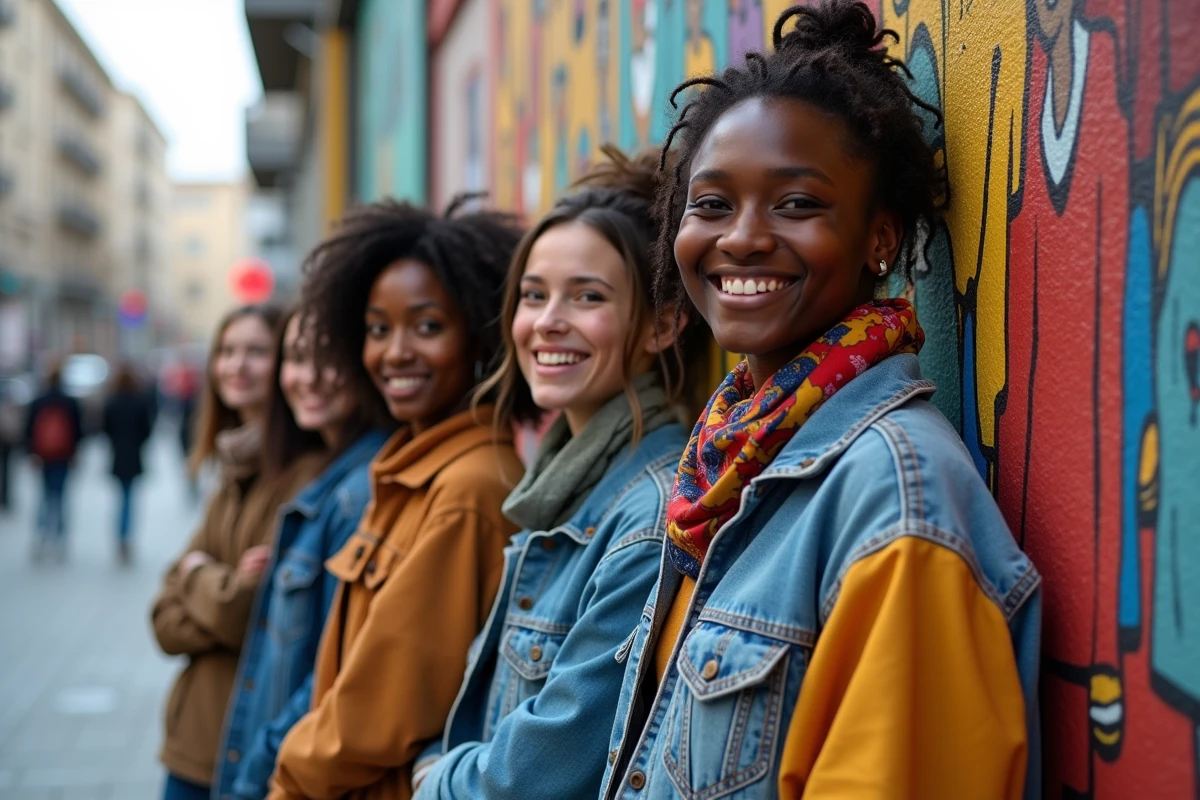
A garment adopted by a minority can, in just a few seasons, become a global emblem or disappear without a trace. The dress codes imposed by certain institutions sometimes persist where society believes it has gained freedom. Conversely, protest movements regularly transform these same codes into instruments of affirmation or rupture.
Some creators are elevated to cultural icons while others remain anonymous despite considerable influence. The boundaries between imitation and invention, conformism and singularity, shift with social exchanges and technical innovations.
Fashion, mirror and engine of individual and collective identity
Fashion is not limited to beautifying everyday life. It is at the heart of social and cultural dynamics, serving as a true field of expression. According to Georg Simmel, fashion acts as a marker of distinction: it embodies the constant tension between the desire to blend into the group and the fierce wish to stand out. Clothing is never neutral. It tells a story of social class, age, gender, sometimes rebellion or, on the contrary, adherence to norms. Contemporary fashion plays with these boundaries, mixing heritage and novelty to reflect the multiplicity of collective identities.
On the street, each silhouette becomes a silent message. From the suburbs to the plush salons of haute couture, each environment forges its aesthetic benchmarks. The impact of fashion on culture is measured in this flow of exchanges, borrowings, and subversions. Walter Benjamin understood this well: fashion, a mirror of the shocks of history, captures collective sensitivity and crystallizes the spirit of an era.
To better understand these mechanisms, here are some major axes on which fashion acts:
- Fashion clothing: a tool for recognition, but also for emancipation.
- Trends: they echo social mutations and reveal tensions within society.
- Style: a means of asserting one’s personality in the face of group pressure.
Society, in perpetual evolution, uses fashion as a field of experimentation for individual and collective identities. Every clothing choice questions belonging and contributes to reshaping contemporary culture. Fashion, caught in this game of tensions, continues to invent and reveal the spirit of the times.
How do communities and the street reinvent dress codes?
The street does not wait for orders from above. A true open-air laboratory, it infuses contemporary fashion with raw, sometimes unpredictable energy. In popular neighborhoods, within collectives, on social networks, creativity explodes. Streetwear, born on the fringes of official circuits, has established itself both on runways and in everyday life. This movement disrupts the hierarchy of trends, brings its own codes, and inspires the entire industry.
We see how today, each clothing choice becomes an opportunity to express a collective vision. Brands, once trendsetters, now observe the signals emerging from the street and communities. Social networks act as accelerators, circulating styles, amplifying influences, and encouraging self-expression. This dynamic is reflected in the rise of hybrid looks, the multiplication of unexpected mixes, and the emergence of a global fashion that values diversity.
To illustrate this phenomenon, several key trends can be identified:
- Streetwear: a blend of urban and sporty codes, constantly renewing itself.
- Sustainable fashion: a response to the quest for meaning, affirming a new social consciousness.
- Collective dynamics: shared creations, bubbling creativity, rapid circulation of trends around the world.
As soon as fashion listens to the street, it demonstrates its ability to translate social transformations. Communities become a driving force for aesthetic renewal, challenging and redefining what is considered “trendy.”

Fashion as language: between art, society, and contemporary questions
Fashion, through its gestures, cuts, and materials, establishes itself as a language in its own right. It traverses society, making visible and tangible. Beyond the fabric, it delivers a message: self-affirmation, belonging, protest, or the quest for difference. Thinkers like Georg Simmel or Walter Benjamin already read much more than mere ornamentation: the living trace of a collective and individual work on identity.
When clothing becomes a work of art, it invokes aesthetics and raises questions about the everyday. Contemporary fashion blurs the lines between pure creation and industry, between utility and expression. Season after season, creators stage the tensions of their time: acceleration of social and cultural mutations, questioning of ethical fashion, and the search for meaning in the face of standardization.
Here are some aspects that illustrate these issues:
- Emergence of new visual codes
- Dialogue between historical, artistic references and current society
- Reactions to the major upheavals of contemporary society
In France and elsewhere, fashion questions society’s ability to renew and reinvent itself. Through its choices, it highlights the strength of collective imaginations, the diversity of responses to today’s challenges. In the cut of a garment or the shade of a fabric, it reveals the hopes, tensions, and paradoxes that traverse an industry always in motion. And what if tomorrow, a simple style detail triggered a new collective upheaval?