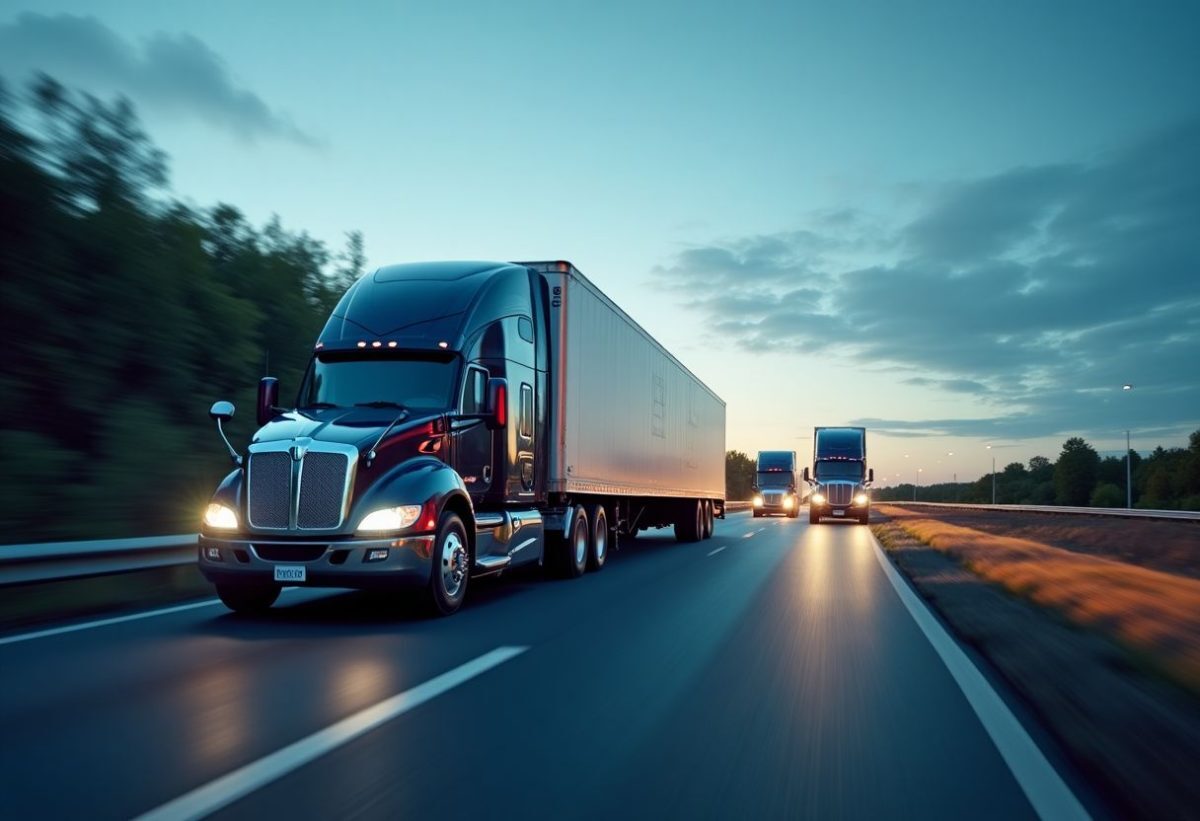
Managing a fleet of vehicles represents a considerable challenge for companies, especially when it comes to maintaining a balance between operational efficiency, safety, and costs. Modern technologies now offer a powerful solution to this complex equation: fleet tracking. By integrating tracking tools, companies not only gain efficiency but can also improve the safety of their drivers, reduce operating costs, and ultimately optimize the overall performance of their fleet. Delving into the world of fleet tracking reveals a universe where every detail matters for those who wish to be at the forefront of fleet management.
The Benefits of Fleet Tracking
Adopting a fleet tracking solution offers numerous benefits, going far beyond just locating vehicles.
- Operational Efficiency: With real-time visibility, managers can optimize routes, avoid heavy traffic areas, and reduce unplanned downtime.
- Cost Reduction: By monitoring fuel consumption and identifying inefficient driving behaviors, companies can achieve substantial savings on their expenses.
- Improved Safety: Tracking systems allow for monitoring driving habits, identifying risky behaviors, and promoting safer driving practices.
- Proactive Maintenance: By receiving alerts about vehicle maintenance, companies can act before a serious problem occurs, thereby extending the lifespan of their assets.
Key Technologies in Fleet Tracking
At the heart of fleet tracking are several technologies that, together, form a robust and efficient system.
Geolocation is undoubtedly the most well-known element, allowing for precise real-time tracking of vehicles. But beyond simple location, modern GPS offers advanced functions such as creating geo-fences. These zones allow managers to receive alerts as soon as a vehicle enters or exits a defined perimeter. Telematics, on the other hand, collects a multitude of data on the vehicle’s status, including speed, fuel consumption, and mechanical diagnostics. Combined with big data and predictive algorithms, fleet tracking becomes a powerful optimization lever.
Implementing a Fleet Tracking System
Implementing an effective fleet tracking system requires careful planning and a clear understanding of the company’s needs.
- Needs Assessment: Before adopting a system, it is essential to identify the specific challenges your company wishes to address, whether it is reducing costs, improving safety, or optimizing logistics.
- Choosing the Solution: There are a multitude of solutions on the market, each offering specific functionalities. It is important to choose the one that best meets the previously identified needs.
- Team Training: Adopting new technologies can be disruptive. Properly training your teams is essential to ensure a smooth transition and maximize the use of the implemented tools.
- Continuous Analysis: Once the system is in place, it is crucial to regularly analyze the collected data to adjust strategies and continue optimizing fleet management.
The Challenges of Fleet Tracking
Although fleet tracking offers many advantages, it is not without challenges, and companies must be ready to tackle them.
First, the issue of data privacy often arises. Companies must ensure that the data collected is protected and used ethically.
Next, resistance to change is a common obstacle, as some employees may be reluctant to the idea of being constantly monitored. To overcome this, transparent communication and appropriate training are essential.
Finally, fleet tracking must be regularly updated to take advantage of the latest innovations and remain competitive.