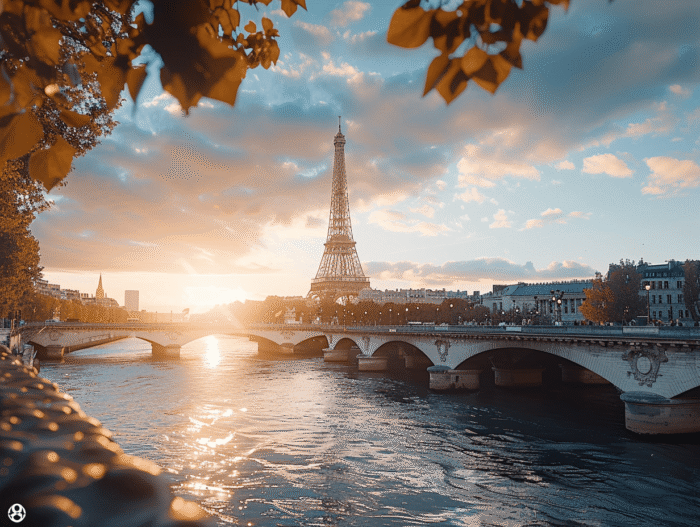
Paris, the city of light and epicenter of art, never ceases to amaze with its architectural richness. Beyond its iconic monuments and world-renowned museums, the bridges of the Seine are an essential part of its heritage. These structures, silent witnesses to the passage of time, not only connect the banks but also weave a thread of history and art. Each bridge, with its sculptural details and innovative designs, tells a story of an era, aesthetic ambitions, and technical prowess. They are the discreet jewels that complete the historical and aesthetic tableau of the French capital.
The historic bridges of Paris: open-air works of art
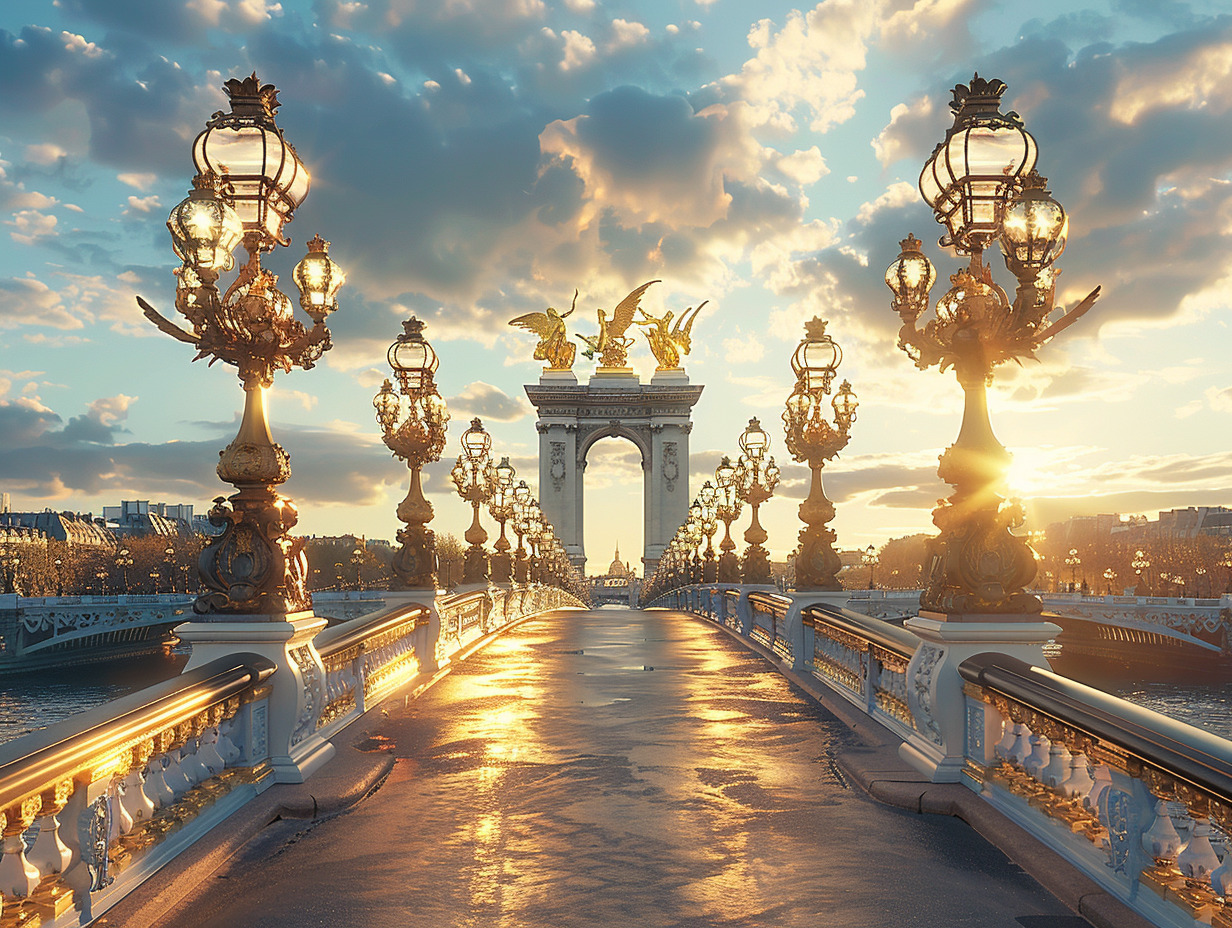
Walking along the banks of the Seine is like leafing through a history book through the architecture and art that unfold on its bridges. Among these works, the Pont-Neuf stands proudly as the oldest bridge in Paris, beginning its story under the reign of Henri III. On the other hand, the lavish Pont Alexandre III, with its candelabras, nymphs, and golden pegasuses, celebrates Franco-Russian friendship and remains a symbol of the artistic exuberance of the Belle Époque, having had its first stone laid by Nicholas II and Félix Faure during the 1900 World’s Fair.
The Pont Bir-Hakeim, for its part, combines utility and aesthetics, allowing the passage of the elevated metro while offering a unique perspective on the Eiffel Tower and the riverbanks. Not far away, the Pont de la Concorde displays a sobriety rich in history, its stones coming from the demolished Bastille, and connects the two banks at the heart of French political power.
Lyrical elements also enter this inventory with the Pont Mirabeau, immortalized by Guillaume Apollinaire, which translates into poetry the melancholy of the waters beneath the bridge. Here, the sculpture by Jean-Antoine Injalbert adds a dialogue between art and the daily lives of passersby, between the river and the eternal city.
In this harmony of stone and steel, the Léopold-Sédar-Senghor footbridge, formerly the Solferino footbridge, stands out for its modernity and elegance. Designed by architect Marc Barani, this pedestrian bridge invites leisurely strolls, suspended between the Musée d’Orsay and the Louvre, serving as a cultural link as well as a contemporary feat, fitting into the ongoing dialogue between the past and present that characterizes Parisian urbanism.
The history and evolution of Parisian bridges through the centuries
The bridges of Paris are witnesses to the evolution of the city, its architecture, and its construction techniques. **The history of these structures** on the Seine dates back to ancient times, where the need to cross the river has always been a major concern. With its 37 bridges, Paris offers a unique panorama of architectural styles, from the oldest like the **Pont-Neuf**, inaugurated by Henri III, to the most recent like the **Pont Charles-de-Gaulle**, built between 1993 and 1996. Each bridge tells a page of Parisian history, from the consolidation of royal power to industrial growth and the challenges of modernity.
Over the centuries, the bridges of Paris have transformed, some disappearing, others restored or rebuilt, responding to the changing needs of the city. The **Pont Aval**, the longest bridge in Paris, and the **lifting bridge on Rue de Crimée**, the last lifting bridge in the capital, illustrate this technical and functional evolution. Engineers such as Jean Résal, associated with Rabel and Alby for the Pont Mirabeau, brought their expertise to create structures suited to their time, while ensuring aesthetics and durability.
The conservation and restoration of Parisian bridges are at the heart of heritage concerns. Structures like the **Simone-de-Beauvoir Footbridge**, designed by Dietmar Feichtinger and inaugurated in 2006, show that respect for historical heritage can coexist with innovation and contemporary design. These bridges are not just crossings; they are destinations in themselves, offering walks and visits that delight residents and visitors alike, while serving as a backdrop to the majestic Notre-Dame Cathedral, a pearl of cultural heritage by the Seine.