
You have just found the perfect article on an online store. When it’s time to pay, three or four options appear: credit card, digital wallet, bank transfer, installment payment. Each protects your data differently, and the right choice depends as much on the amount as on the site where you are shopping.
Tokenization and biometric authentication: what really protects your banking data

Before comparing payment methods, it’s essential to understand the mechanism that secures them. When you pay with Apple Pay or Google Pay, your actual card number is never transmitted to the merchant. The system generates a token, which is a temporary number, usable only once.
This process is called tokenization. It renders intercepted data unusable. Even if a hacker accesses the token, they cannot reuse it for another purchase.
Biometric authentication (fingerprint, facial recognition) adds an extra layer. No one can validate the payment on your behalf, as the validation relies on a physical characteristic unique to you. By combining tokenization and biometrics, mobile wallets significantly reduce the exposure of your banking details.
To delve deeper into the topic, a detailed guide compares secure online payment methods based on their level of protection and common usage.
Single-use virtual card: the reflex for one-time purchases
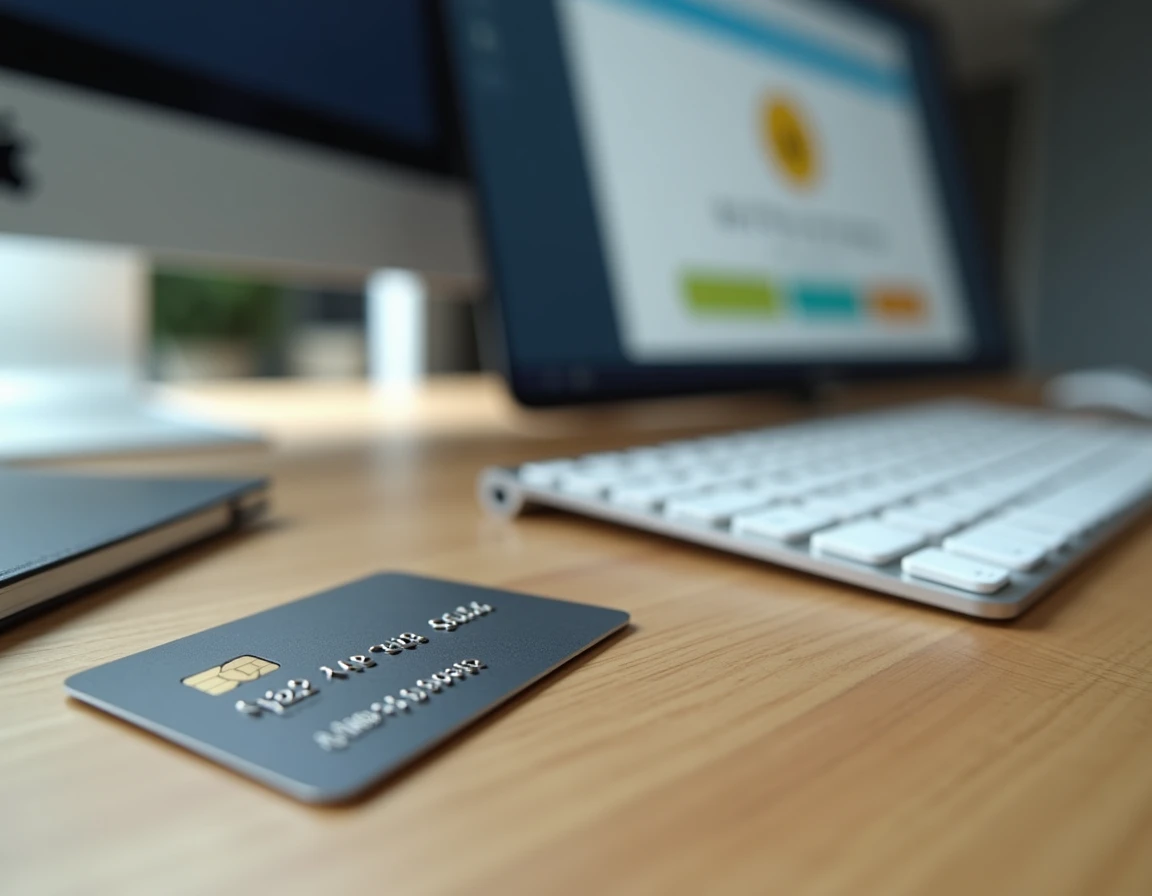
Are you buying from a site you are not familiar with yet? The single-use virtual card is the most suitable option. Several French banks (Banque Populaire, among others) integrate this feature directly into their mobile apps.
The principle is simple. You generate a temporary card number, with a limit and a validity period that you define. Once the transaction is completed, this number becomes unusable.
When to prefer a virtual card over a traditional card
- On a little-known or recent merchant site, where you have no insight into the reliability of data storage
- For a trial subscription that you might forget to cancel, as the next charge will be automatically blocked
- For a one-time purchase abroad, to avoid your actual banking details circulating on a remote server
A single-use virtual card protects as much as a mobile wallet, with the advantage of working on all sites that accept credit cards, without needing a third-party app.
3D Secure exemptions and risk analysis: the invisible security of everyday life
Have you ever noticed that some online purchases go through without any additional verification, while others require an SMS code or biometric validation? It’s not a coincidence.
The European regulation DSP2 imposes strong authentication for most online payments. It is triggered via the 3D Secure protocol. In practice, your bank or banking app asks you to confirm your identity before validating the transaction.
Exemptions exist to streamline the shopping experience. Risk analysis programs (like Safe’R by CB in France) evaluate each transaction in real-time. If the amount is low or if the merchant has a very low fraud rate, the additional verification can be waived without reducing security.
What this changes for you
When a site displays the 3D Secure or Verified by Visa logo, your bank guarantees a refund in case of an unauthorized transaction. This safety net does not exist for all payment methods.
Bank transfers, for example, do not benefit from this dispute mechanism. Once the money is sent, getting it back depends on the goodwill of the recipient. That’s why bank transfers should be reserved for payments between trusted individuals or transactions overseen by a notary.
Online installment payment: pitfalls to check before subscribing
Installment payment (Buy Now Pay Later) offered by players like Alma or Klarna is appealing due to its simplicity. But these solutions are not all equal in terms of transparency.
European and national regulators are tightening the framework for these services. The ability to repay must be assessed before validation. Fees must be clearly displayed, not buried in general conditions.
- Check if fees apply: some 3-month installments are free, while others charge a percentage of the total amount
- Read the policy in case of late payment, as penalties vary significantly from one provider to another
- Monitor the number of active installment credits simultaneously, as each can be reported to credit agencies
An installment payment is not a free advantage; it is a financial commitment. If you use it for a low-value purchase, the risk of additional costs often outweighs the perceived benefit.
Concrete criteria for choosing based on the purchase situation
Rather than looking for the “safest” payment method in absolute terms, tailor your choice to the context. Here’s a quick reference:
| Situation | Recommended Method | Reason |
|---|---|---|
| Known site, recurring purchase | Mobile wallet (Apple Pay, Google Pay) | Tokenization + biometrics, no manual entry |
| Unknown site, one-time purchase | Single-use virtual card | Temporary number, no risk of reuse |
| Purchase with desired buyer protection | Credit card with 3D Secure | Right to dispute with the bank |
| Payment between individuals | Bank transfer (with IBAN verification) | No fees, but no automatic recourse |
The choice of a secure online payment method depends on two questions: do you know the seller, and what amount are you committing to? For a familiar site, the speed of a mobile wallet is sufficient. For a first purchase on a foreign platform, the virtual card remains the most protective reflex.