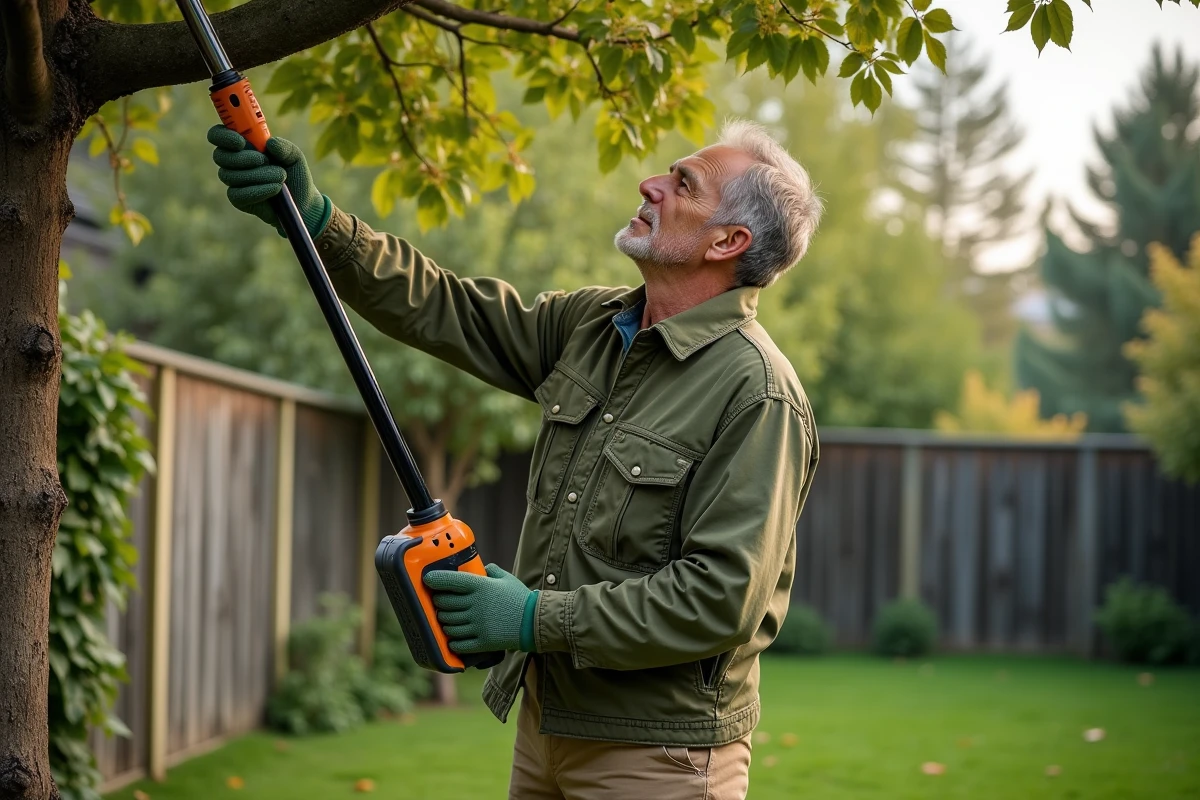
Pole saw, pruning chainsaw, thermal or battery model: the choice of a pruning saw depends on specific technical parameters that vary according to the nature of your trees and the frequency of use. Comparing these parameters allows you to quickly identify the type of machine suited to your gardening tasks.
Comparison table of types of pruning saws: pole, classic, thermal, and battery
Before detailing each criterion, a synthetic overview of the main families of pruning saws helps to lay the groundwork for the choice.
| Type of pruning saw | Main use | Relative weight | Autonomy / Power | Maintenance |
|---|---|---|---|---|
| Thermal pruning chainsaw | Thick branches, intensive use | Heavier | High power, autonomy linked to the tank | Regular (spark plug, filter, fuel) |
| Battery pruning chainsaw | Medium branches, moderate use | Light (without battery) | Moderate power, autonomy limited by the battery | Low (no thermal engine) |
| Thermal pole saw | High branches, prolonged use | Heavier | High power, prolonged work | Regular |
| Battery pole saw | High branches, occasional use | Light | Moderate power, variable autonomy | Low |
This table highlights a key difference: the choice between pole and classic pruning saw depends on the cutting height. A pole saw allows you to work from the ground, without a ladder or harness. A pruning chainsaw requires climbing the tree or using a lift for high branches.
Recent product sheets emphasize concrete ergonomic criteria such as weight without battery, guide length, and chain speed. These often-overlooked data weigh as much as the raw power of the motor on the actual comfort of use. To delve deeper into this type of comparison, the detailed sheets available on elagueuse-warrior.com allow you to compare technical specifications model by model.
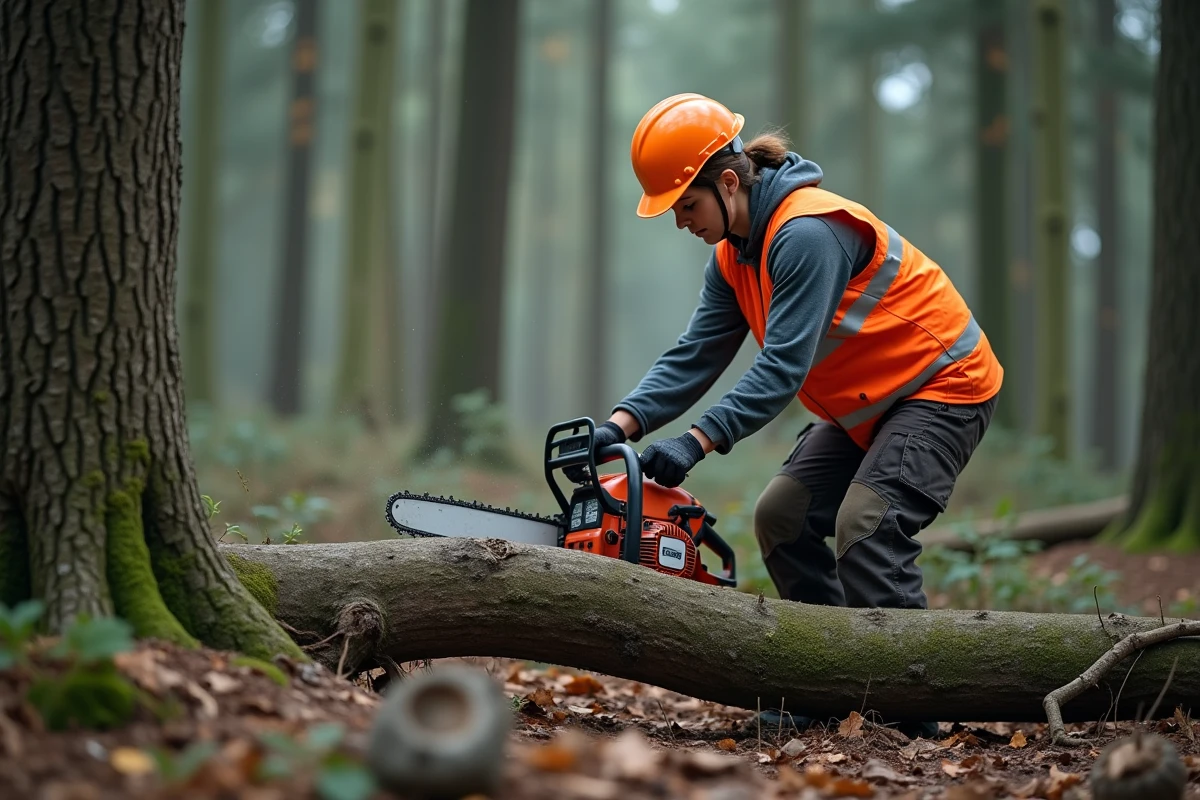
Battery or thermal pruning saw: the differences that really matter
The motorization remains the most structuring criterion. However, the arguments put forward in most guides often remain superficial. Two differences deserve a more in-depth analysis.
Real autonomy vs. advertised power
On a battery model, the displayed power does not predict the actual working duration. Real autonomy depends on the diameter of the branches cut and the pace. Cutting thin branches consumes little energy, while hard and thick wood drains the battery much faster.
Recent guides emphasize daily battery management: avoid complete discharges, do not expose the accumulator to heat, store it at half charge. Battery maintenance conditions its longevity as much as the choice of the initial model.
Maintenance of the thermal engine: a cost often underestimated
A thermal engine requires regular monitoring: replacing the spark plug, cleaning the air filter, managing the fuel-oil mixture. These operations represent a recurring expense and maintenance time. In contrast, a battery model requires almost no mechanical maintenance.
For occasional use (a few sessions per year), the balance tips towards battery. For intensive use on large trees, thermal retains the advantage in sustained power and work autonomy.
Weight and guide length: two underestimated ergonomic criteria
Many buyers focus on the power of the motor. User feedback shows that the weight of the machine and the length of the guide chain determine the quality of work at least as much.
- A high weight quickly tires the arms and shoulders, especially on a pole saw held at arm’s length for several minutes. Prioritizing the lowest possible weight for your category of machine improves cutting precision
- The length of the guide determines the maximum diameter of accessible branches. A short guide (around 20-25 cm) is sufficient for standard pruning. A longer guide adds weight and reduces maneuverability without necessity for standard gardening tasks
- Models with a swiveling head offer an adjustable cutting angle, sometimes from 0 to 90 degrees, making it easier to access poorly positioned branches without straining posture
A lightweight model with a guide suited to the actual diameter of your branches will be more effective than an oversized and heavy machine.
Renting or buying a pruning saw: a decision based on frequency of use
Renting pruning equipment, with insurance included, has become a credible alternative for occasional use. If you only prune once or twice a year, buying a pruning saw represents an investment that sits idle in the garage most of the time.
Renting allows access to professional equipment without bearing the purchase cost or maintenance. It is particularly suitable for exceptional work on large trees requiring a powerful machine.
On the other hand, for a garden with several fruit trees or hedges to maintain regularly, purchasing an entry-level battery model quickly pays off. The decisive criterion remains frequency: beyond three to four annual uses, buying becomes more rational.
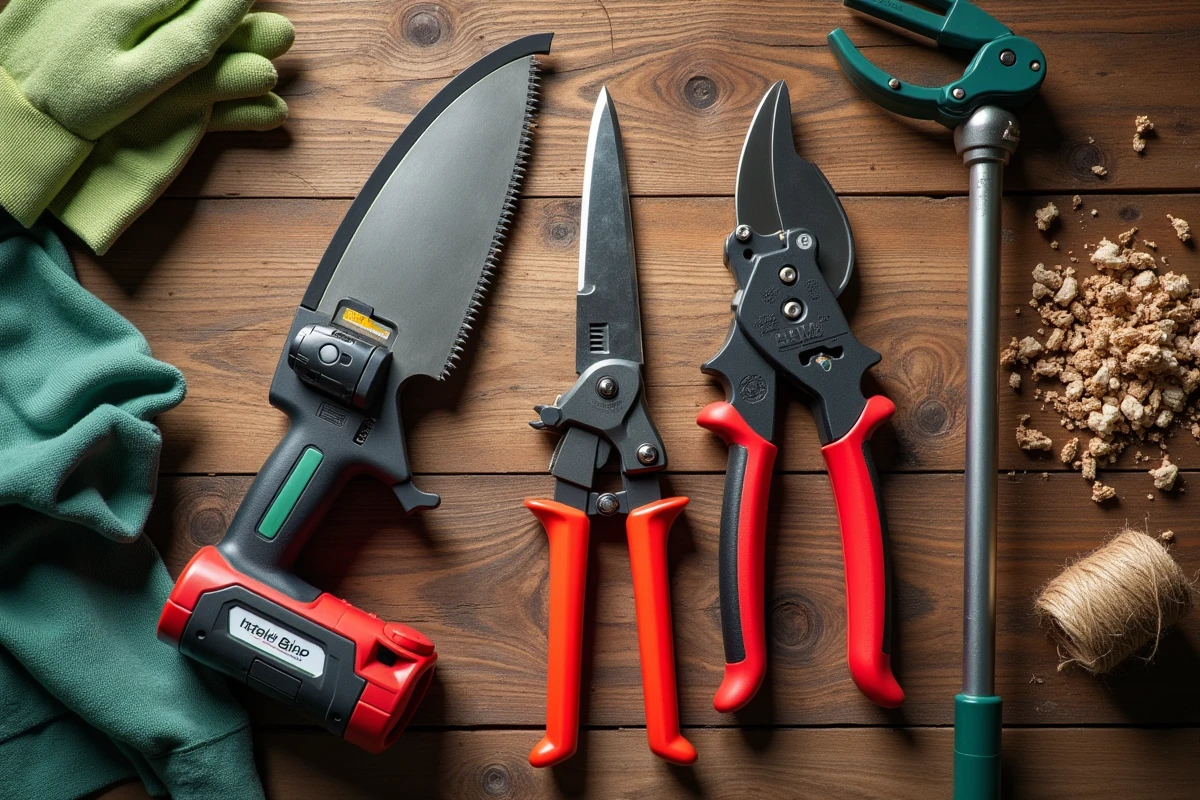
Safety and skills: what the tool cannot replace
Choosing the right pruning saw does not exempt you from mastering basic gestures. The profession of tree surgeon requires diplomas, additional training, and strict safety rules. For an individual, certain precautions remain non-negotiable.
- Wear cut-resistant gloves, protective glasses, and a helmet, even for seemingly minor tasks
- Never use a pole saw above your head without clearing the area of falling branches
- Check the tension and condition of the chain before each use: a poorly tensioned chain increases the risk of derailment
- For large diameter branches located at height, calling a trained professional remains the safest solution
The pruning saw does not compensate for a lack of technique or protection. Working at height on mature trees falls under professional expertise, regardless of the model used.
The choice of a pruning saw boils down to three concrete decisions: cutting height (pole or classic), frequency of use (battery, thermal, or rental), and actual diameter of branches to be treated (guide length and power). Starting from these three parameters avoids oversized purchases and directs you towards a tool that corresponds to your trees, not to a marketing sheet.