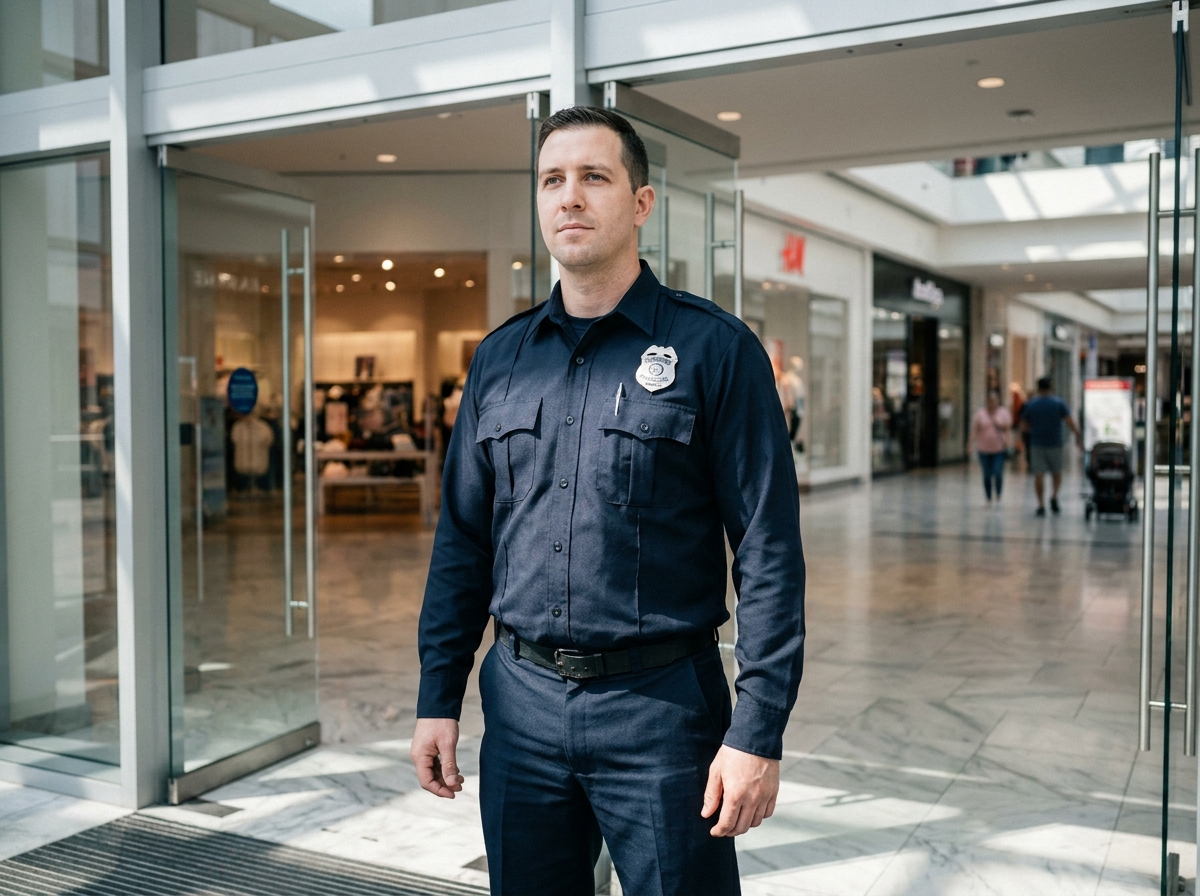
The SSIAP 1, the security guard, and the mediator sometimes operate on the same sites, at the same times, facing the same public. Their uniforms look similar, and their posts are adjacent in the halls of shopping centers or the forecourts of train stations. However, the three professions fall under radically distinct legal frameworks, training, and field realities.
Legal framework and professional card: three regimes that do not overlap
The private security agent (commonly referred to as a security guard) operates under the authority of Book VI of the Internal Security Code. He must hold a professional card issued by the CNAPS, renewable every five years, subject to a background check and obtaining a CQP APS or an equivalent RNCP title.
The SSIAP 1 agent falls under a different regulatory framework: the amended decree of May 2, 2005, which governs fire safety in establishments open to the public (ERP) and high-rise buildings (IGH). His qualification is based on a specific diploma obtained after approximately 175 hours of training, including first aid, fire extinguisher handling, and reading the fire safety system (SSI).
For those considering joining a fire safety company, this training is the mandatory foundation before any job assignment.
The social mediator, on the other hand, does not have a professional card in the sense of the CNAPS. His activity is governed by the professional title of social mediator for access to rights and services (high school level, registered with the RNCP), but no text prohibits practice without this title. Local authorities and associations employ mediators trained internally, without national certification. This lack of regulatory locking clearly distinguishes mediation from the other two professions.
Field missions of SSIAP 1, the security guard, and the mediator: three areas of action
The confusion between these three positions often arises from the fact that they share the same place of operation. However, their missions almost never overlap operationally.
SSIAP 1 Agent: fire prevention and assistance to individuals
The SSIAP 1 agent monitors the central security post, conducts rounds to check installations (sprinklers, smoke extraction, emergency exits), performs doubt clearance in case of an alarm, and writes the daily log. His primary mission remains fire risk prevention, not monitoring individuals. In the event of a disaster, he guides the evacuation and ensures the first contact with firefighters.
Security Guard: safety of property and individuals
The private security agent ensures access control, human or video surveillance, theft prevention, and acts of vandalism. Since the law of August 18, 2026 (article L.613-2-1 of the Internal Security Code), surveillance and guarding agents can perform visual inspections of vehicles and their trunks before access to certain sensitive sites, major events, or installations of vital importance. This inspection remains subject to the express consent of the driver.
The same law provides for a trial of body cameras for private security agents, a device previously reserved for law enforcement. Field feedback varies on this point: some companies see it as a de-escalation tool, while others fear it complicates data processing obligations.
Social Mediator: link between users and institutions
The mediator does not monitor anything and does not protect any property. He intervenes in public spaces or within structures (transport, priority neighborhoods, hospitals) to defuse tensions through dialogue, direct users to the relevant services, and facilitate coexistence. His main tool is speech, not rounds or cameras.
Working conditions: hours, hardship, and recognition
The three professions share a common reality: atypical hours, a high proportion of night, weekend, and holiday work. The differences lie in the details.
- The SSIAP 1 mostly works in shifts of 12 or 24 hours, depending on the sites. Positions in tertiary IGH offer more stable conditions (extended office hours) than positions in shopping centers or hospitals, where night shifts are common.
- The security guard follows variable schedules dictated by his employer (often a private security company). Part-time contracts are still common in the guarding sector. Night and Sunday bonuses exist but vary according to the applicable collective agreement (prevention-security).
- The social mediator generally benefits from less fragmented hours, aligned with public presence times (end of the day, evening, Saturday). Positions in local authorities often offer a more protective contractual framework (fixed-term or permanent public law contracts), but associative positions remain dependent on annual funding.
The physical hardship also differs significantly. The SSIAP 1 walks through floors, climbs and descends technical stairs, and sometimes carries first intervention equipment. The security guard often remains in prolonged standing at an access point or control post. The mediator walks in public spaces, sometimes in tense contexts, but without the constraint of carrying equipment.

Training and professional development: limited pathways
The paths only intersect marginally. A private security agent holding the CQP APS can complement his qualification with an SSIAP 1 diploma to undertake mixed missions (safety and fire), which is sought after in sites combining both obligations. The reverse is less common: an SSIAP 1 wishing to switch to safety must obtain his CNAPS professional card and validate a CQP APS.
The social mediator operates in a distinct field. No formal pathway exists between mediation and private security, although relational skills transfer from one position to another. The natural progression for the mediator involves team coordination or the state diploma in mediation (DEMF), not through Book VI of the Internal Security Code.
In terms of salary, available data do not allow for a definitive conclusion regarding a net advantage for either profession at the start of a career. Discrepancies widen mainly with seniority, night bonuses, and the type of employer (public sector, private company, association). The determining factor remains less the chosen profession than the structure that employs and the volume of hours actually worked.